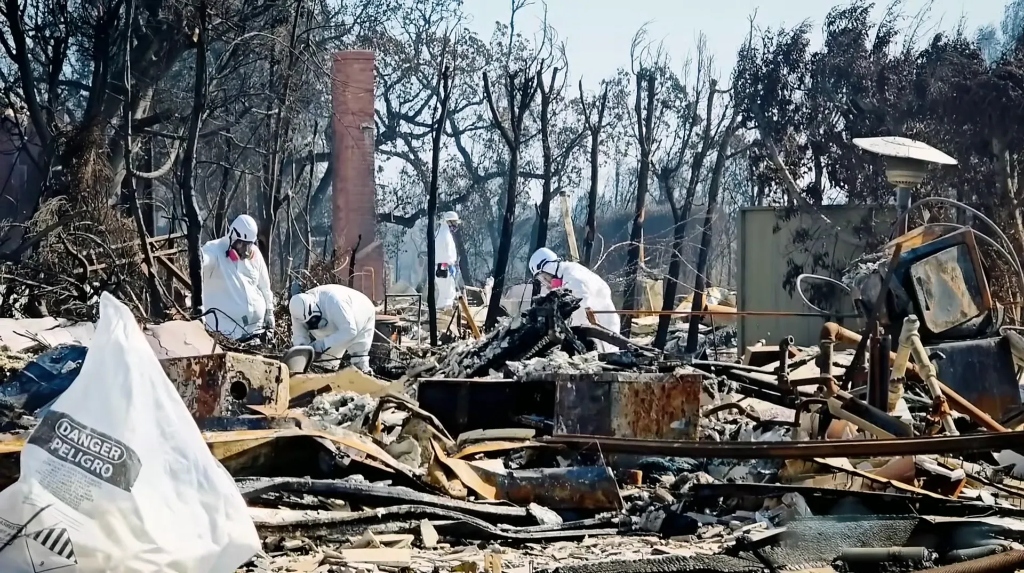
Standing in a fire-damaged home, the question that follows "is everyone okay?" is usually "is anything okay?" The honest answer is that far more survives a house fire than most people expect — but only if the right things happen in the first days, and only if you know which items are genuinely unsafe to keep. This guide walks through what can be saved, what has to go, and where the line is between a DIY wipe-down and a job for a contents-restoration crew.
First: What Not to Do Before You Start Salvaging
Before touching anything, two federal cautions matter more than any cleaning tip. The U.S. Fire Administration warns not to re-enter a damaged site because fires can rekindle from hidden, smoldering remains, and to watch for structural damage — roofs and floors may be subject to collapse. It also says plainly: if the fire department shut off your utilities, do not attempt to turn them back on yourself. Wait for the all-clear and for the utility company. Our step-by-step guide to the first hours after a house fire covers that sequence in detail.
What Must Be Thrown Away
Food, drinks, and medicine — no exceptions
This is the clearest rule in federal guidance. Per the U.S. Fire Administration, food, beverages, and medicine exposed to heat, smoke, soot, and water should not be consumed. That includes items that look sealed and fine. Heat degrades medication, and smoke carries combustion byproducts that penetrate packaging.
Two useful exceptions from USFA's salvage guidance: canned goods and food in jars can often be washed in detergent and water and kept — mark the contents with a grease pencil if labels come off. But discard any can that has bulged or rusted, and never refreeze frozen food that has thawed.
Heavily soot-loaded porous items
Mattresses, pillows, and heavily saturated upholstered furniture are usually replaced rather than restored — porous materials hold both soot particles and odor deep in the fill, and cleaning cost often exceeds replacement value. That call is worth making with your adjuster present, not before.
What Can Usually Be Saved
Clothing and textiles
More survives here than people assume. USFA notes that smoke odor and soot can sometimes be washed from clothing, and publishes a formula for bleachable garments using tri-sodium phosphate (TSP) — with an explicit caution to test garments first, follow manufacturer instructions, and handle TSP carefully since it's caustic. For anything delicate, valuable, or heavily loaded with soot, professional textile cleaning (often ozone-free, using specialized detergents) recovers far more than a home washer will.
Hard goods, cookware, and metals
Pots, pans, and flatware clean up well: USFA recommends washing with soapy water, rinsing, then polishing with a fine-powdered cleaner. Copper and brass respond to polish, or to salt on a lemon wedge or a vinegar-saturated cloth. Locks and hinges — especially iron — should be taken apart and wiped with oil rather than left to corrode.
Leather and shoes
Wipe leather goods with a damp cloth then a dry one, stuff purses and shoes with newspaper to hold their shape, leave suitcases open, and — importantly — dry leather away from heat and sun. Once dry, clean with saddle soap. Rinsing leather and suede jackets in cold water and drying them away from heat is USFA's recommendation.
Books, photographs, and paper
This is the category where speed changes outcomes most. USFA advises that wet books must be taken care of as soon as possible, and that the best method to save them is freezing in a vacuum freezer, which removes moisture without damaging the pages — with a normal freezer as a holding step until one can be located. A local librarian, it notes, can be a good resource. The same logic protects photographs: freezing buys you time and prevents pages and prints from drying fused together.
Electronics and appliances — with a hard condition
Many survive, but not on your say-so. USFA is explicit: don't use appliances that have been exposed to water or steam until a service representative checks them, and notes steam can remove lubricant from moving parts. Soot is another problem entirely — it's fine, conductive, and settles inside housings, so a device that powers on today can fail weeks later. Have electronics evaluated before energizing them.
How Soot Should (and Shouldn't) Be Removed
The most common way people destroy salvageable items is wiping them. Dry soot on a dry surface acts like an abrasive — wiping grinds particles into the finish and turns a cleanable film into permanent staining. Federal salvage guidance for fire-damaged belongings is to vacuum soot and ash off items, never vacuum wet or damp items (wait until they're dry), and use a HEPA-filtered vacuum — HEPA matters because the particles are fine enough to pass straight through an ordinary vacuum and back into the room's air.
USFA's own salvage section opens with the practical bottom line: professional fire and water damage restoration businesses may be the best source of cleaning and restoring your personal belongings. Contents restoration crews sort, inventory, pack out, and clean off-site using ultrasonic baths, HEPA extraction, and controlled drying — and they document everything for the claim, which matters as much as the cleaning.
Replacing Documents You Can't Save
Some paper is simply gone, and USFA publishes a replacement checklist worth working through methodically: driver's license and auto registration (DMV), bank books (your bank, immediately), insurance policies (your agent), military discharge papers (VA), passports (passport service), birth/death/marriage certificates (state bureau of records), divorce papers (issuing circuit court), Social Security and Medicare cards (local SSA office), credit cards (issuers, immediately), deeds and titles, stocks and bonds, wills, medical records, warranties, income tax records, citizenship papers, and mortgage papers. Start this list early — replacements take weeks, and your claim may need several of these.
Why the Clock Matters More Than the Cleaning
Soot isn't inert. It's acidic and it keeps reacting with the surfaces it's resting on, which is why metals pit, plastics yellow, and finishes etch in the weeks after a fire rather than during it. Add the water the fire department used, and you have a second problem stacking on the first: the EPA advises that wet materials be dried within 24–48 hours to prevent mold growth. A fire loss is very often a water loss too, and the two clocks run at the same time.
That's the real argument for calling quickly — not the cleaning itself, but the window. Items triaged in the first days are usually recoverable; the same items after three weeks of soot and humidity frequently aren't.
Fire Damage in Pomona or the Inland Empire? We Handle Contents Too.
SureDry Restoration Inc. provides fire and smoke damage cleanup across Pomona, Claremont, La Verne, San Dimas, Montclair, Chino, Chino Hills, Diamond Bar, Rancho Cucamonga, Ontario, and greater LA County — emergency board-up, structural cleanup, odor removal, and contents restoration, with the itemized documentation your insurance claim needs. If firefighting water was involved, our water damage restoration crew dries the structure in the same project. Call (909) 573-5760 or request a free estimate — and before you throw anything away, let someone look at it. More is savable than it looks.
Frequently Asked Questions
Can food be saved after a house fire?
Generally no. U.S. Fire Administration guidance is direct: food, beverages, and medicine exposed to heat, smoke, soot, and water should not be consumed. Sealed canned and jarred goods can often be washed and kept, but discard any can that has bulged or rusted, and never refreeze frozen food that has thawed.
Are electronics and appliances safe to use after a fire?
Not until they're checked. USFA advises against using appliances exposed to water or steam until a service representative inspects them — steam can strip lubricant from moving parts, and soot is conductive and corrosive inside electronics. Don't plug anything in to 'test' it, and never restore gas or power yourself.
Can smoke-damaged clothing be cleaned?
Often, yes. USFA notes smoke odor and soot can sometimes be washed out of clothing, and offers a tri-sodium phosphate formula for bleachable garments — with the caution to test first and follow the manufacturer's instructions. Delicate, valuable, or heavily soot-loaded textiles do better with professional cleaning.
How do you save wet books and photographs?
Speed matters. USFA advises taking care of wet books as soon as possible and says the best method is freezing them in a vacuum freezer, which removes moisture without damaging pages — a regular freezer works as a holding step. The same buys-you-time principle applies to photos: freeze rather than let them dry stuck together.
Should I vacuum soot off my belongings myself?
Only carefully, and only when items are dry. Federal salvage guidance advises vacuuming soot and ash off items but never vacuuming wet or damp items — wait until they're dry — and using a HEPA-filtered vacuum. Wiping soot with a dry cloth usually grinds it in and makes staining permanent.
What documents do I need to replace after a fire?
USFA publishes a full checklist: driver's license and auto registration, bank books, insurance policies, military discharge papers, passports, birth/death/marriage certificates, Social Security cards, deeds and titles, stocks and bonds, wills, medical records, tax records, and mortgage papers — each with the agency to contact.