Mold Removal & Remediation in Chino Hills, CA — HVAC, Attic & Slab Moisture Specialists
Chino Hills homes don't grow mold from dramatic floods — they grow it from slow, hidden moisture: AC condensation, sweating attic ducts, slab vapor under flooring, and warm inland summers that never let a damp wall dry out. SureDry Restoration Inc. finds the source, removes the mold safely, and stops it from coming back.
Mold Removal Experts Who Know Chino Hills Homes
Chino Hills is a warm-inland, hillside city of 1980s–2000s slab-on-grade tract homes — The Preserve, Butterfield Ranch, Vellano, Los Serranos, and Rolling Ridge. That combination is a recipe for hidden mold. Long hot summers run air conditioning hard, concrete slabs wick ground vapor up into flooring, and two-story homes trap moisture in wall cavities and attics where it never gets a chance to dry. SureDry Restoration Inc. works these homes every week, dispatching from neighboring Pomona to find the mold you've been smelling — and the moisture feeding it.
Why Chino Hills Homes Grow Mold
Mold needs three things: spores (always present in the air), organic material (drywall, wood, dust), and moisture. The first two are unavoidable, which is why the EPA is blunt that the key to mold control is moisture control. In Chino Hills, the moisture is rarely a visible flood — it's the slow, warm-weather kind: condensation, slab vapor, and small leaks that sit undried in the summer heat. Fix the moisture and the mold has nothing to feed on; miss it, and it comes right back.
Mold Problems We See Most in Chino Hills
Long inland summers run the AC hard across The Preserve, Butterfield Ranch, and Vellano. Clogged condensate drain lines, supply ducts sweating in hot attics, and cold registers meeting humid air leave drywall and insulation damp — mold shows up around vents and in closets with no plumbing leak in sight.
On concrete slab foundations, a slow supply-line seep or vapor migration under vinyl plank or laminate keeps the underside damp with no visible puddle. Mold colonizes the flooring underlayment and baseboards — the classic “we dried the carpet but it still smells” problem.
Two-story tract homes with upstairs baths develop grout and caulk failures and slow shower-pan or toilet-supply seeps that wick into the wall cavity and the ceiling of the room below. Warm temperatures accelerate growth behind the tile long before a stain appears.
On graded downhill lots, uphill-facing earth-side walls and enclosed sub-areas trap ground humidity against framing and insulation. Mold grows on the back of drywall and on stored contents in lower-level rooms and garages — moisture you smell before you see.
Water that entered during a Carbon Canyon or Chino Hills State Park runoff event — mopped but not dried to the EPA 24–48 hour standard — resurfaces weeks later as musty odor and dark spotting inside exterior walls.
Is Mold a Health Risk? What the CDC Says
Mold is not just a building problem. According to the CDC, exposure can cause a stuffy nose, sore throat, coughing or wheezing, burning eyes, or a skin rash — and people with asthma or a mold allergy, or with weakened immune systems, may have more severe reactions. If your symptoms ease when you leave the house and return when you come home, that's a strong sign of an indoor moisture problem worth investigating.
Our Mold Remediation Process
We find the mold and the moisture feeding it using moisture meters and thermal imaging — under flooring, behind walls, in ductwork, and in attics — because remediation that doesn't fix the source only buys time.
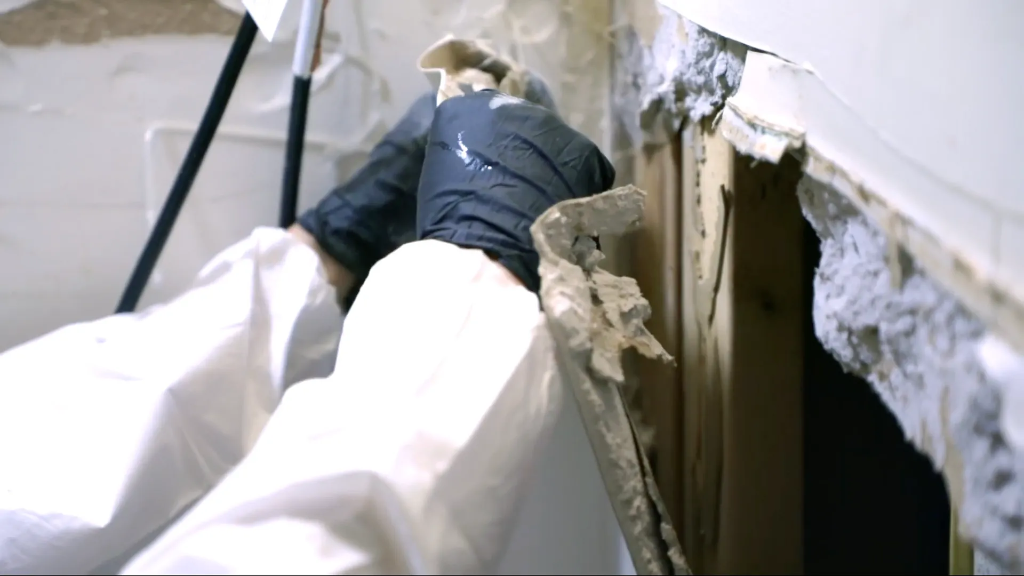
We isolate the affected area so spores don't spread during removal. Following EPA remediation guidance, larger areas get containment and negative air pressure; our crews use the appropriate protection for the size and location of the growth.
Affected porous materials that can't be cleaned are removed and bagged, and the air is scrubbed with HEPA filtration to capture airborne spores.
Salvageable framing and surfaces are cleaned and treated with EPA-registered antimicrobials to kill remaining growth.
The step that actually prevents recurrence — we correct the AC condensate line, seal the slab, repair the leak, or address the ventilation that let moisture build in the first place.
We replace the drywall, flooring, and finishes we removed and confirm the area is dry and clean — returning your home to normal, under one contract from inspection to final repair.
DIY vs. Calling a Pro (the EPA 10-Sq-Ft Rule)
The EPA offers a practical line: if the moldy area is less than about 10 square feet (roughly a 3-by-3-foot patch), a homeowner can often handle it. Once it's larger than that, is inside HVAC systems, or follows significant water damage, it's time for a professional. Most of what we find in Chino Hills — mold in ductwork, under flooring, or inside wall cavities — is exactly the kind that hides its true size until the wall comes open.
Residential & Commercial Mold Remediation in Chino Hills
We serve homes across Los Serranos, Butterfield Ranch, The Preserve, Vellano, and Rolling Ridge, plus businesses around The Shoppes at Chino Hills and the Chino Hills Parkway corridor. For homeowners we work clean and contain the area to protect the rest of the house; for commercial clients we schedule around operating hours and keep the documentation your insurer and property manager require. Because mold in Chino Hills almost always starts with water, our Chino Hills water damage restoration team and this mold crew are one operation — the leak, the mold, and the rebuild handled under a single contract. See all restoration services in Chino Hills.
Musty Smell or Visible Mold? Call Us First.
Mold spreads and the moisture keeps feeding it until the source is fixed — so the sooner we look, the smaller the job. SureDry Restoration Inc. reaches most Chino Hills addresses within the hour and handles water and mold under one team. Call (909) 573-5760 for a mold inspection and a free estimate.