Mold Removal & Remediation in San Dimas, CA — Post-Flood & Foothill Moisture Specialists
In San Dimas, mold usually follows water — mudflow that dried slowly, a flooded crawl space near the canyon, or ground moisture in the Bonelli–Puddingstone basin. SureDry Restoration Inc. finds the moisture source, removes the mold safely, and stops it from coming back — dispatching from neighboring Pomona.
Mold Removal Experts Who Know San Dimas
San Dimas mold is usually a water story. Foothill moisture dries slowly, mudflow off the burn scars leaves organic material behind, and the ground around San Dimas Canyon and the Bonelli Park–Puddingstone basin stays saturated after storms — all of it feeding mold in crawl spaces, lower levels, and wall cavities. Add the semi-rural equestrian properties with their barns and outbuildings, and you need a remediation company that understands foothill moisture. SureDry Restoration Inc. dispatches from neighboring Pomona and handles the water and the mold together.
Why San Dimas Homes Grow Mold
Mold only needs moisture, which is why the EPA stresses that the key to mold control is moisture control. In San Dimas that moisture is often left behind by a flood or mudflow, or it seeps up from saturated foothill ground — the slow, lingering kind that grows mold in a crawl space or behind a wall long after the visible water is gone. Fix the source and the mold stops; miss it and it returns.
Mold Problems We See Most in San Dimas
Mudflow and canyon flooding leave contamination and organic material that grow mold fast if the structure isn't dried to standard. A home that was mucked out but not fully dried resurfaces later with musty odor and spotting.
Homes near San Dimas Canyon and the Puddingstone basin sit over ground that stays wet after storms, pushing moisture into crawl spaces and sub-areas. Mold grows on framing and the underside of floors — smelled long before it's seen.
On the Via Verde hillsides, failed area drains and slope drainage push moisture against foundations and lower-level earth-side walls, keeping framing and insulation damp enough for hidden mold.
On equestrian and semi-rural lots, barns, tack rooms, and outbuildings flood and stay damp, growing mold on wood framing and stored contents that a house-only cleanup would miss.
San Dimas's established slab-plumbing homes develop slow under-slab and behind-wall seeps that keep materials damp, growing mold under flooring and behind cabinets long before a stain shows.
Is Mold a Health Risk? What the CDC Says
According to the CDC, mold exposure can cause a stuffy nose, sore throat, coughing or wheezing, burning eyes, or a skin rash, and people with asthma or a mold allergy, or with weakened immune systems, may react more severely. Crawl-space and sub-area mold is easy to ignore because you can't see it, but it still circulates spores through the home.
Our Mold Remediation Process
We inspect crawl spaces, sub-areas, and wall cavities with meters and thermal imaging, tracing the mold back to the flood, ground, or drainage source feeding it.
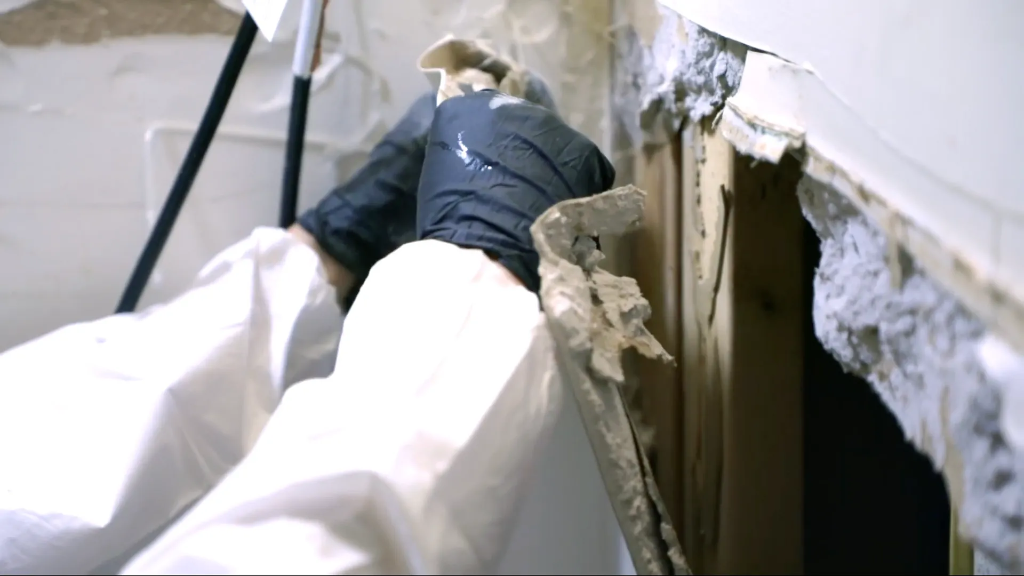
We isolate the affected area so spores don't spread. Following EPA remediation guidance, larger areas get containment and negative air pressure, matched to the size and location.
Affected porous materials that can't be cleaned are removed and bagged, and the air is scrubbed with HEPA filtration.
Salvageable framing and surfaces are cleaned and treated with EPA-registered antimicrobials.
The step that lasts — we address the drainage, ground moisture, or undried flood behind the mold, so it doesn't simply grow back.
We replace what we removed across homes and outbuildings and confirm the area is dry and clean — one team, one contract.
DIY vs. Calling a Pro (the EPA 10-Sq-Ft Rule)
The EPA's rule of thumb: a moldy area under about 10 square feet (a 3-by-3-foot patch) is often a DIY job, while anything larger, or anything following significant water damage, calls for a professional. Post-flood and crawl-space mold in San Dimas is almost always larger and more hidden than it looks — the exact case for a proper inspection.
Residential & Commercial Mold Remediation in San Dimas
We serve homes across Via Verde, the San Dimas Canyon area, and the tracts near Bonelli Park and Puddingstone — including larger semi-rural and equestrian properties — plus businesses along Bonita Avenue and Arrow Highway. Because San Dimas mold almost always begins with water, our San Dimas water damage restoration team and this mold crew are one operation — the water, the mold, and the rebuild together. See all restoration services in San Dimas.
Musty Smell or Visible Mold? Call Us First.
Mold spreads and the moisture keeps feeding it until the source is fixed — so the sooner we look, the smaller the job. SureDry Restoration Inc. reaches most San Dimas addresses within the hour and handles water and mold under one team. Call (909) 573-5760 for a mold inspection and a free estimate.