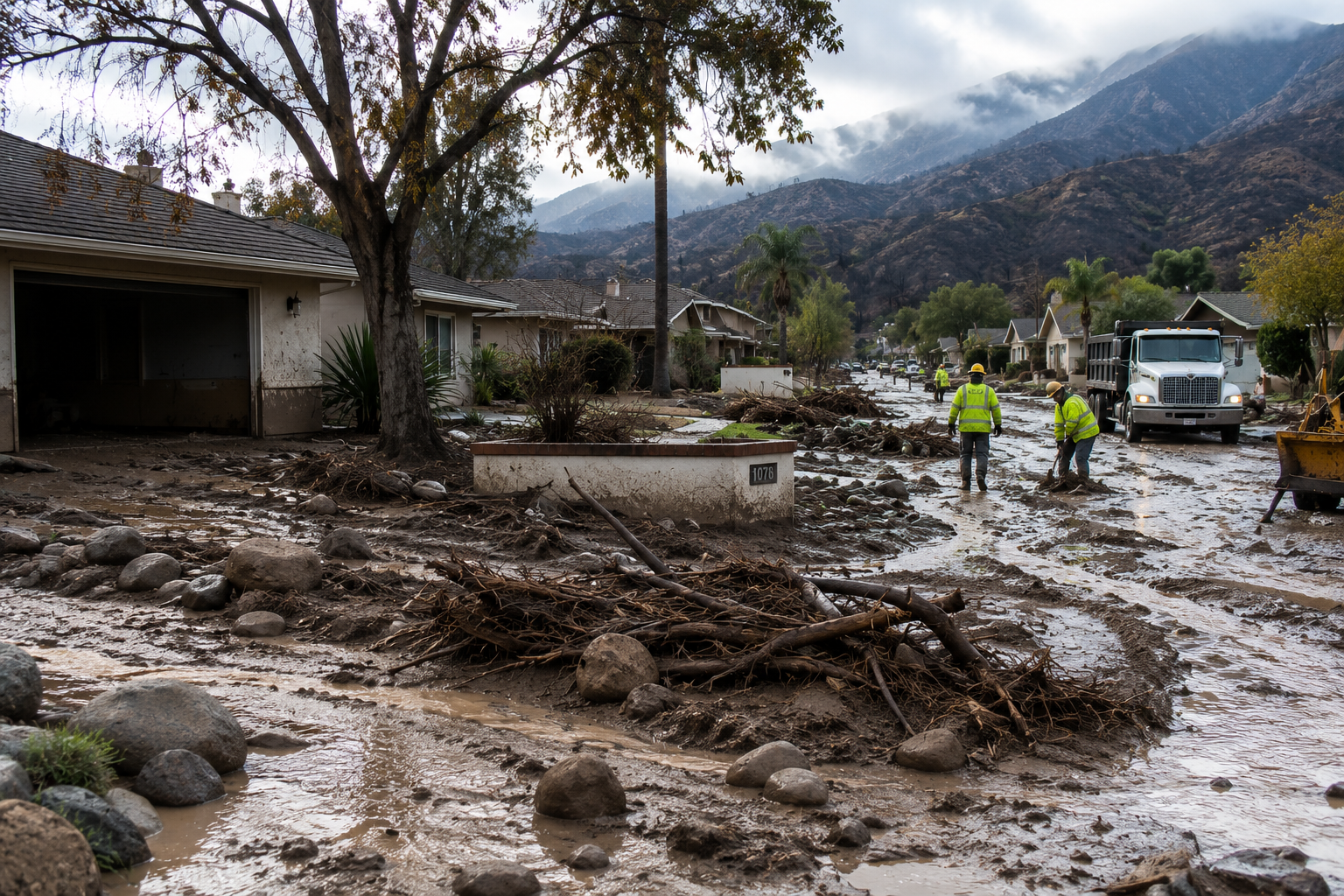
Mud or storm water in your home right now? Call SureDry Restoration at (909) 573-5760 for 24/7 flood cleanup and mud-out across San Dimas. Preparing ahead of the storm instead? Good — that's the version of this story where you win. Here's what every foothill homeowner in San Dimas should know about burn-scar mudflows: who's at risk, how to prepare, what insurance actually covers, and what recovery involves if the mud comes anyway.
Am I at Risk? The Short Answer for San Dimas Foothill Homes
If your home sits downslope or downstream of a recent San Gabriel Mountains burn scar — along San Dimas Canyon, near the San Dimas Wash, in the northern foothill neighborhoods, or on the Via Verde hillsides — you are in debris-flow territory during storm season. The September 2024 Bridge Fire — which ignited in the East Fork area of the San Gabriels and briefly put San Dimas neighborhoods north of Foothill Boulevard under evacuation warning — and other recent mountain fires left burn scars above the valley, and burned slopes shed water and mud for years afterward. Homes on the flats near Bonelli Park and Puddingstone sit in the basin that collects what comes down.
Why Burn Scars Turn Rain Into Mud
Fire strips the vegetation that normally absorbs rainfall and binds the soil. The USGS explains that after a fire, bare and burned slopes can't soak up storm water — so it runs off fast, picking up ash, soil, rock, and debris as it goes. The result isn't ordinary flooding: it's a fast-moving slurry that hits with the force of wet concrete.
How Little Rain It Takes
This is the number that surprises people: per the USGS, as little as 7 millimeters — about 0.3 inches — of rain in 30 minutes has triggered debris flows in Southern California burned areas, and storm intensity above roughly 0.4 inches per hour is cause for concern. A ten-minute cloudburst over the burn scar can matter more than a full day of gentle rain.
How Long the Danger Lasts After a Fire
The USGS notes some of the largest debris flows occur during the first storm season after a fire, and Cal OES warns that debris and mud flows can occur up to five years after a wildfire, until vegetation reestablishes. The scar doesn't have to be from last summer's fire to matter this winter.
San Dimas Geography: Where the Water and Mud Go
San Dimas Canyon drains the front range straight down through the north of the city, feeding the San Dimas Wash. The foothill neighborhoods closest to the mountains take the first hit; the Via Verde hillsides add their own slope-drainage risk when area drains clog; and the low ground around Frank G. Bonelli Regional Park and Puddingstone Reservoir is where the regional runoff collects. LA County maintains debris basins in the front range specifically to catch this material — but basins fill, and intense cells can outrun them. Knowing which of these zones your home sits in tells you which preparations matter most.
Prepare Before the Storms: A San Dimas Checklist
Everything on this list has to happen before rain is in the forecast. In order of importance:
1. Sign Up for Alerts and Watch the Forecast
Register for LA County emergency alerts at alert.lacounty.gov, and during storm season watch the county's mud and debris flow forecasts. Ready.gov advises signing up for community warning systems as the first step in any debris-flow plan — evacuation warnings only work if they reach you.
2. Sandbags and Property Protection
LA County urges burn-area residents to find their nearest sand and sandbag distribution site (pw.lacounty.gov/dsg/sandbags) and prepare before storms arrive; LA County Public Works' 24-hour line, 1-800-675-HELP, can also direct you to sandbag sites. Sandbag doorways, garage openings, and the uphill side of the property. Keep gutters, downspouts, and area drains clear — on a hillside lot, a clogged drain is how storm water chooses your house.
3. Make an Evacuation Plan — and Actually Leave
Ready.gov puts it plainly: you can't stop or change the path of a debris flow. If officials issue an evacuation warning for your area, go — a flow moves faster than a person can run. Plan two routes out (canyon roads can close), keep essentials packed during storm season, and decide in advance where the family meets.
4. Buy Flood Insurance Before You Need It (the 30-Day Rule)
Covered next — but the deadline logic belongs on the checklist: NFIP policies generally take 30 days to become effective, so flood insurance bought when a storm is already in the forecast won't cover that storm. The dry season is the buying season.
The Insurance Reality: Mudflow vs. Landslide
Three layers every foothill homeowner should understand. First: FEMA is blunt that flood damage isn't covered by standard homeowners policies — and just one inch of floodwater can cause more than $25,000 in damage. Second: FEMA's NFIP fact sheet defines mudflow as "a river of liquid and flowing mud on the surface of normally dry land areas" — and mudflow, so defined, is insured as a type of flood under an NFIP policy. Third: a landslide — earth moving as a solid mass — is covered by neither NFIP nor homeowners insurance. After a debris event, the classification of what hit your home can decide the entire claim, which is why thorough documentation (photos, video, timelines) from the moment damage occurs is worth real money. We prepare that documentation on every storm-loss job we work.
During the Storm: Warning Signs and What to Do
Ready.gov's warning signs for slopes above you: changes in the way storm water drains, leaning trees, and bulging ground at the base of a slope. During intense rain over the burn scar, stay alert and stay out of canyon bottoms and wash channels; if you hear a rumbling that grows louder — debris flows sound like approaching trains — move to high ground immediately. Property is replaceable.
After the Mud: What Recovery Actually Involves
Mud-out is its own kind of restoration job. Storm debris slurry is contaminated water — the CDC warns floodwater can carry infectious organisms and chemical hazards — and the mud itself holds moisture against framing long after the storm passes. Real recovery means mucking out the debris, extracting the water, removing unsalvageable porous materials, drying the structure to documented moisture standards, and rebuilding. Our San Dimas water damage restoration team handles the full sequence — and our restoration cost guide explains how storm-loss pricing works.
San Dimas Storm and Flood Help, 24/7
SureDry Restoration responds around the clock across San Dimas — the foothill neighborhoods, Via Verde, the canyon area, and the flats by Bonelli Park — with emergency flood cleanup and water extraction, mud-out, structural drying, and insurance documentation. See all our restoration services in San Dimas, or call (909) 573-5760. And if it's a clear day as you read this: the checklist above takes one afternoon. Storm season won't wait for a convenient week.
Frequently Asked Questions
How long after a wildfire does debris-flow risk last?
Risk stays elevated for years. The USGS notes some of the largest debris flows happen in the first post-fire storm season, and Cal OES warns debris and mud flows can occur up to five years after a wildfire — until vegetation recovers enough to hold the slopes. If a burn scar sits above you, treat every storm season in that window as a risk season.
How much rain does it take to trigger a debris flow below a burn scar?
Far less than a major storm. Per the USGS, as little as 7 millimeters — about 0.3 inches — of rain in 30 minutes has triggered debris flows in Southern California burned areas, and storms with intensity above roughly 0.4 inches per hour are cause for concern. A brief, intense cell over the burn scar matters more than the storm's total rainfall.
Does homeowners insurance cover mudflow damage in California?
No — standard homeowners policies exclude flood damage, and FEMA notes just one inch of floodwater can cause more than $25,000 in damage. Mudflow is insured as a type of flood under the National Flood Insurance Program, so an NFIP policy is what covers it — not your homeowners policy. Landslides are a separate story and are excluded from both.
What's the difference between a mudflow and a landslide for insurance purposes?
Everything. FEMA's NFIP fact sheet defines mudflow as 'a river of liquid and flowing mud on the surface of normally dry land areas' — that's covered as flood under an NFIP policy. A landslide — earth moving as a solid mass — is not covered by NFIP or standard homeowners insurance. After a debris event, how the damage is classified can decide the whole claim, which is why documentation matters.
When should I buy flood insurance if I live below a burn scar?
Now — before storms are in the forecast. FEMA notes there is generally a 30-day waiting period before an NFIP flood policy takes effect, so coverage bought when rain is already on the radar won't apply to that storm. If your San Dimas home sits below the foothills, the window to act is the dry season.
Where do I get sandbags in San Dimas?
LA County Public Works maintains sand and sandbag distribution sites for residents — find the nearest at pw.lacounty.gov/dsg/sandbags, or call Public Works' 24-hour line at 1-800-675-HELP. Place them before storms arrive, focusing on doorways, garage openings, and the uphill side of the property where runoff channels toward the house.