When water floods a room or a pipe bursts inside a wall, the first question most homeowners ask is simple: how much is this going to cost? The honest answer is that water damage restoration is priced by the job, not by a menu — but the factors that drive the bill are predictable, and once you understand them you can budget, vet a quote, and avoid being overcharged. This 2026 guide breaks down water damage restoration cost for homeowners across Pomona, Los Angeles County, and the Inland Empire.
How Much Does Water Damage Restoration Cost? (2026 Quick Answer)
For most Southern California homes, water damage restoration runs from around a thousand dollars for a small, contained clean-water event to well into five figures for a flooded floor, a sewage backup, or damage that has already caused mold. Treat any single number you see online as a third-party contractor estimate, not a fixed or government price — your actual cost is set by three things: how contaminated the water is, how hard it is to dry, and how much of your home it reached.
Because those variables swing so widely, the only reliable figure comes from an on-site inspection. A reputable professional water damage restoration company will measure the moisture, scope the work, and give you a written estimate before starting — and, when a claim is involved, bill to insurance-industry pricing your carrier recognizes.
What Drives Water Damage Restoration Cost
Every credible estimate is built from the same set of cost drivers. Understanding them tells you why two "water damage" jobs can differ by a factor of ten.
- Water category (contamination): clean, gray, or black water — the dirtier it is, the more material must be removed and sanitized.
- Water class (drying difficulty): how much water is present and how hard it is to evaporate, which sets how much equipment runs and for how many days.
- Affected square footage: more area means more extraction, more drying equipment, and more labor.
- Materials involved: drywall and carpet dry or replace cheaply; hardwood, plaster, and concrete are slow and costly to dry.
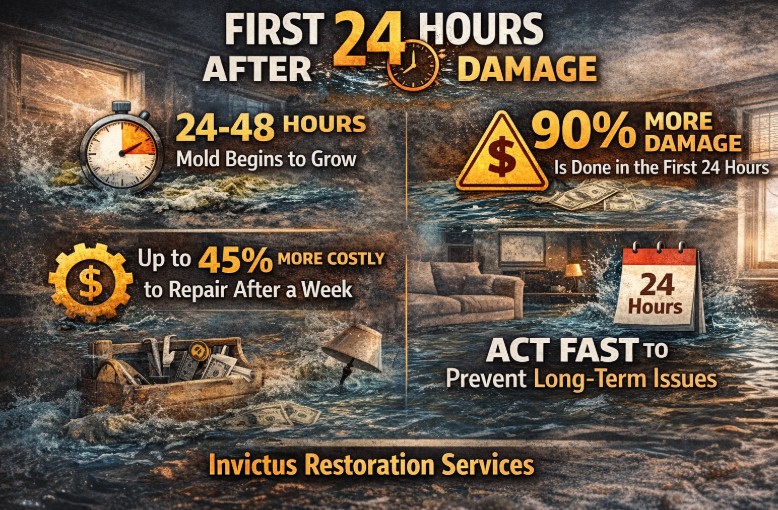
- How long it sat: moisture left more than 24–48 hours invites mold, which adds remediation to the bill.
- Repairs vs. mitigation: drying the structure is one phase; rebuilding drywall, flooring, and cabinets is a second.
Water Categories 1–3 (Clean, Gray, Black Water)
The restoration industry works to the ANSI/IICRC S500 standard — the guiding standard for professional water damage restoration — which sorts every loss into a category by how contaminated the water is:
- Category 1 — clean water: from a sanitary source such as a supply line or overflowing sink. Least costly, but it degrades to Category 2 within hours to days if left standing.
- Category 2 — gray water: contains contamination that can cause illness — think washing-machine or dishwasher discharge. Requires more removal and sanitizing.
- Category 3 — black water: grossly contaminated, including sewage and floodwater. It demands the most protective handling, and porous materials it touched (carpet, drywall, padding) usually must be removed and replaced — the most expensive category.
Water Classes 1–4 (Drying Difficulty)
Category is only half the story. The S500 also assigns a class describing how much water is present and how hard it will be to dry — which drives how much equipment runs and how many days crews are on site:
- Class 1: smallest amount of water, minimal absorption — fastest and cheapest to dry.
- Class 2: a larger area with water wicked into carpet, cushion, and walls a foot or so up.
- Class 3: the greatest evaporation load — water may have come from above, saturating ceilings, walls, and subfloors.
- Class 4: specialty deep-saturation drying of low-evaporation materials like hardwood, plaster, and concrete, requiring extended drying and specialized methods.
Cost by Scenario: Ceiling, Flooded Room & Sewage
It helps to translate categories and classes into the situations homeowners actually call about. The figures below are contractor/third-party estimate ranges, not quotes — every job needs its own inspection.
Ceiling Water Damage Repair Cost
Ceiling damage usually traces to a roof leak, failed plumbing, or an overflow from an upstairs bathroom. Cost turns on whether the drywall can be dried and patched or has to be cut out and replaced, and on what is happening in the cavity above. A persistent brown stain is rarely "just a stain" — it usually means moisture is still active, and where there is trapped moisture there is often mold. If a ceiling stain keeps returning, budget for mold removal and remediation alongside the drywall repair.
Flooded Room & Whole-Floor Cleanup Cost
A flooded room or floor is where costs climb, because it combines extraction, structural drying, and often material replacement. The scale is easy to underestimate: FEMA's National Flood Insurance Program notes that just one inch of floodwater can cause about $25,000 in damage. For standing water and large-area losses, fast water extraction and flood cleanup is what keeps a flooded floor from becoming a torn-out floor.
Sewage Backup Cleanup Cost
A sewage or drain backup is the most expensive common scenario per square foot, and for good reason: it is Category 3 black water — a biohazard. It carries bacteria and pathogens, which is why DIY cleanup is genuinely dangerous and why professional work costs more: technicians need personal protective equipment, containment, removal and disposal of porous materials, and full sanitizing. This is never a mop-and-bucket job; it is emergency extraction and cleanup with strict safety protocols.
Structural Drying After Water Damage in Los Angeles
"Structural drying" is the phase between pulling out the standing water and rebuilding — and it is where the difference between a professional and a DIY job is starkest. Under Chapter 12 of the IICRC S500 standard, structural drying is a measured process: commercial air movers create airflow, dehumidifiers pull moisture out of the air, temperature is controlled to speed evaporation, and crews take daily moisture and psychrometric readings until the structure reaches a documented dry goal.
That last point is the one homeowners miss. The S500 does not allow a job to stop because a surface looks dry — it stops when instruments confirm the framing, subfloor, and drywall have returned to a normal moisture content. That is why a "mop and a fan" leaves moisture inside the wall that later becomes mold, and why professional water damage restoration in Los Angeles and the Inland Empire is priced around days of monitored drying, not a single visit.
Mold Remediation Cost After Water Damage
Mold is the hidden multiplier on any water damage bill. The EPA is blunt about the timeline: it is important to dry water-damaged areas within 24–48 hours to prevent mold growth. Miss that window and you add a remediation phase — containment, removal of affected porous materials, and treatment — to the cost of drying.
Scale drives the price. The EPA advises that a homeowner can often handle a mold patch smaller than about 10 square feet, while larger areas warrant professional containment. For the warning signs to watch after a leak, see our guide to the signs of mold after water damage, and when it is established, our mold removal and remediation team handles it as one project with the water work.
Does Homeowners Insurance Cover Water Damage in California?
This is the question that decides what actually comes out of your pocket, and the answer follows a clear line. According to the Insurance Information Institute, standard homeowners policies generally cover sudden and accidental water damage — such as a burst pipe or a storm-driven top-down roof leak — while sewer and drain backup is generally excluded unless you have added a specific rider. As a matter of common industry practice, other abrupt failures like a ruptured water heater or a broken appliance supply line typically fall under that same "sudden and accidental" umbrella, whereas gradual damage from a leak you failed to maintain usually is not covered.
Water damage is not a rare edge case, either — the III reports that water damage and freezing accounted for more than a fifth of homeowners insurance losses, about 23% in 2023. The critical California distinction is flooding: the California Department of Insurance confirms standard homeowners insurance does not cover flood damage — rising surface water requires a separate NFIP policy that generally takes 30 days to take effect. If your loss involves both fire and water (common after firefighting), our fire and smoke damage cleanup team documents the combined claim.
How to Lower Your Water Damage Restoration Bill
You have more control over the final number than it feels like in the moment. A few actions consistently keep costs down:
- Act within 24–48 hours. Fast drying is the single biggest lever against a mold remediation phase later.
- Shut off the water source and stop the loss from growing before help arrives.
- Document everything — photos and video of the damage before cleanup protect your insurance claim.
- Don't DIY Category 2 or 3 water. Gray and black water are health hazards, and an incomplete cleanup usually costs more to redo.
- Get a proper moisture inspection so the scope matches the real damage — not too little, not too much.
Our first 24 hours checklist walks through exactly what to do the moment you discover water damage.
Get a Free Water Damage Estimate in Pomona & the Inland Empire
The most accurate price for your situation is a free, no-obligation estimate after an on-site inspection. SureDry Restoration Inc. offers 24/7 emergency response across Pomona, Los Angeles County, and the Inland Empire — fast extraction, IICRC-standard structural drying, and direct help with your insurance claim. If you are dealing with water damage right now, contact SureDry Restoration or call (909) 573-5760 for immediate help.
Frequently Asked Questions
How much does water damage restoration cost on average?
Most homeowners see contractor estimates in the low four figures for a contained clean-water event, rising well into five figures for a flooded floor, sewage backup, or damage that sat long enough to grow mold. The real number depends on the water category, the drying difficulty (class), and how much square footage is affected. These are third-party contractor ballparks, not fixed or government prices — the only way to know your cost is an on-site moisture inspection.
What is the difference between a water category and a water class?
Under the IICRC S500 standard, category (1 to 3) describes how contaminated the water is — clean, gray, or black water — while class (1 to 4) describes how much water is present and how hard it is to dry. Both raise the cost, but for different reasons: category drives how much material must be removed and sanitized, and class drives how much equipment and how many days on site. There is no Category 4 or Class 5.
How much does it cost to fix a water-damaged ceiling?
It depends on the leak source (roof, plumbing, or an upstairs bathroom), whether the drywall can be dried and repaired or must be replaced, and whether mold has formed in the cavity above. A small, freshly stained patch is inexpensive; a sagging, saturated ceiling with hidden mold costs considerably more. A persistent brown stain usually means moisture is still active above the ceiling.
Does homeowners insurance cover water damage in California?
Generally, sudden and accidental water damage — a burst pipe, a failed appliance, or a top-down roof leak during a storm — is covered by a standard California homeowners policy, while gradual or maintenance-related leaks are not. Sewer and drain backup usually needs a separate rider, and flooding (rising surface water) is excluded entirely and requires a separate NFIP flood policy. Always read your policy and document everything.
Is flood damage the same as water damage for insurance purposes?
No. Insurers treat top-down, internal, sudden water losses (a pipe or appliance) as 'water damage' that a homeowners policy may cover, but 'flood' means rising surface water from outside and is excluded from homeowners policies. Flood coverage comes from a separate National Flood Insurance Program policy, which generally takes 30 days to take effect — so you cannot buy it once a storm is coming.
Why does professional structural drying cost more than DIY cleanup?
A mop, a box fan, and a shop vac remove the water you can see; they do not dry the water inside walls, subfloors, and framing. Professionals follow the IICRC S500 standard — commercial air movers, dehumidifiers, and daily moisture readings measured to a documented dry goal, not stopped on visual dryness. That prevents the hidden moisture and mold a surface cleanup leaves behind, which is almost always more expensive to fix later.