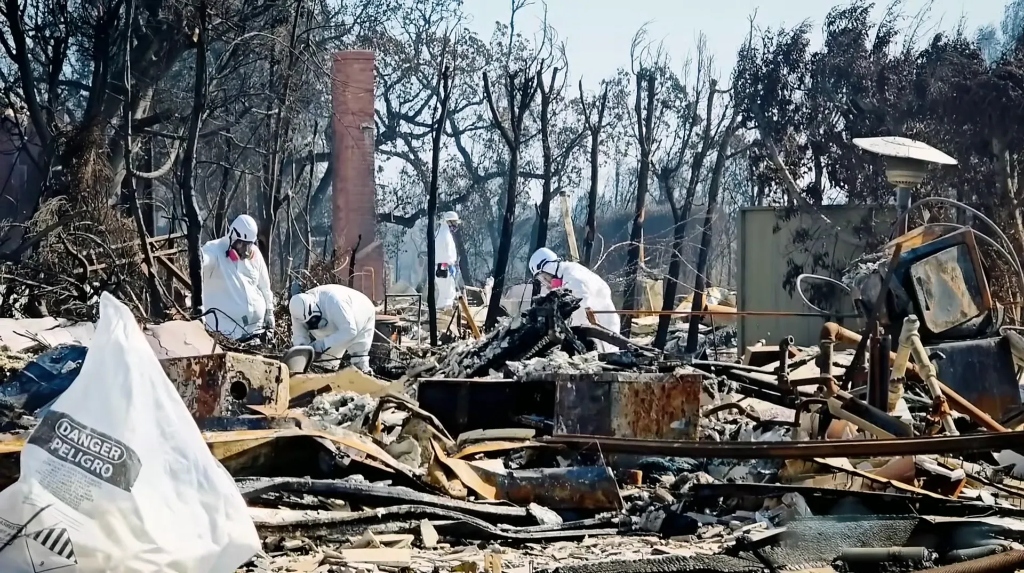
The fire was months ago. The walls were washed, the carpets were cleaned, the house looked fine — and then one hot afternoon, or the first time the air conditioning ran, the smell came back. This is one of the most common and most demoralizing calls we get, and the cause is almost always the same: the odor was treated instead of the source.
Why Smoke Odor Comes Back
Smoke isn't a smell. It's physical residue — microscopic particles and oily, semi-volatile compounds carried on hot air that goes wherever air goes. That means it doesn't stop at the surfaces you can wash. It settles into:
- Wall and ceiling cavities, drawn in through outlets, switch plates, and can lights
- Attic insulation, which is porous, enormous in surface area, and almost never cleaned
- Carpet padding and subfloor beneath carpet that itself got cleaned
- HVAC ducts, which then redistribute it through the house every cycle
- Unsealed wood framing, cabinetry interiors, and closet shelving
Those reservoirs re-release odor when conditions change — which is why the smell reappears on the first hot day, after a rain, or when the AC kicks on. Heat and humidity drive the compounds back out of the material. Nothing "came back"; it never left.
The other reason: soot keeps working
Soot is acidic and reactive. Left in place, it continues etching finishes, pitting metals, and yellowing plastics for weeks after the fire — which is also why odor intensity often increases during the first month rather than fading. Time doesn't help a smoke loss. It compounds it.
What the EPA Actually Says About Ozone Machines
This is where a lot of homeowners get sold something that doesn't work, so it's worth being precise. Ozone generators are widely marketed for smoke odor, and the EPA's position on them is blunt:
- "Available scientific evidence shows that at concentrations that do not exceed public health standards, ozone has little potential to remove indoor air contaminants."
- "There is evidence to show that at concentrations that do not exceed public health standards, ozone is not effective at removing many odor-causing chemicals."
- "Ozone does not remove particles… from the air" — and smoke residue is largely particulate.
The EPA also documents real health effects from inhaling ozone — chest pain, coughing, shortness of breath, throat irritation — notes it may worsen chronic respiratory disease such as asthma, and warns that some studies show ozone concentrations produced by ozone generators can exceed health standards even when one follows the manufacturer's instructions.
Our take, plainly: ozone is not a substitute for source removal. If a contractor's odor plan is essentially "we'll run an ozone machine," that plan is likely to fail — and no one should occupy a space during ozone treatment. The odor problem is a materials problem, and it gets solved by addressing materials.
What Actually Removes Smoke Odor
Effective smoke odor work is unglamorous and sequential. Skipping steps is what causes the smell to return.
1. Remove what can't be cleaned
Charred material, smoke-loaded insulation, carpet padding, and porous items that absorbed residue come out. This is the single highest-impact step and the one most often skipped for cost reasons — and then paid for twice.
2. HEPA-vacuum and clean every surface, in the right order
Dry soot is abrasive: wiping it grinds it into the finish. Fine residue gets HEPA-vacuumed first — HEPA specifically, because the particles are small enough to pass through an ordinary vacuum and blow straight back into the room — and only then are surfaces cleaned with the appropriate agent for each material.
3. Clean the cavities and the framing, not just the room
Where residue reached wall cavities, the drywall comes off, the cavity is cleaned, and the framing itself is treated. This is the difference between a job that holds and one that smells again in July.
4. Address the HVAC system
The system that spread the smoke will keep spreading it. The EPA advises duct cleaning when ducts are clogged with excessive amounts of dust and debris, or when particles are actually being released into the home from supply registers — both common after a fire. The EPA also cautions against routine chemical biocides and sealants in ducts, and says providers should demonstrate why physical cleaning isn't sufficient before applying them. Good advice: insist on cleaning, question the chemicals.
5. Seal — last, not first
After affected materials are removed or cleaned, remaining surfaces get a stain- and odor-blocking primer before finish paint. Sealing is a legitimate final step. Sealing instead of cleaning is what produces the "we painted and it still smells" call.
6. Then, and only then, air treatment
HEPA air scrubbing during the work removes airborne particles. Any residual-odor treatment belongs at the end of a completed process, on an unoccupied space, as polish — not as the strategy.
What You Can Do Yourself
Ventilate when weather allows, run HEPA filtration, wash what's washable, and launder textiles — the U.S. Fire Administration notes smoke odor and soot can sometimes be washed from clothing, and publishes a tri-sodium phosphate formula for bleachable garments (test first, follow manufacturer instructions, and handle TSP with care — it's caustic). What you should not do is repeatedly re-wash heavily loaded fabrics, mask with fragrance, or paint over smoke-stained drywall and hope. For more on which belongings survive a fire, see our guide to what can be saved after a house fire.
Still Smelling Smoke? Let's Find the Source.
If the smell keeps returning, something is still holding residue — and finding it is the whole job. SureDry Restoration Inc. handles fire and smoke damage cleanup across Pomona, Claremont, La Verne, San Dimas, Montclair, Chino Hills, Diamond Bar, Rancho Cucamonga, Ontario, and greater LA County — source identification, material removal, HEPA cleaning, HVAC remediation, sealing, and rebuild, documented for your insurance claim. Call (909) 573-5760 or request a free inspection. If the fix is smaller than you feared, we'll tell you that too.
Frequently Asked Questions
Why does smoke smell come back after the house was cleaned?
Because the source was never removed — only the surfaces were. Smoke residue settles inside wall cavities, insulation, attics, carpet padding, and HVAC ducts, and it re-releases odor whenever heat and humidity rise. Cleaning what you can see treats the symptom; the smell returns the first warm day or the first time the air conditioning runs.
Do ozone machines really remove smoke odor?
Less than the industry implies. The EPA states that at concentrations that do not exceed public health standards, ozone has little potential to remove indoor air contaminants and is not effective at removing many odor-causing chemicals — and that ozone does not remove particles from the air at all. Ozone can also irritate airways and worsen asthma, so treat any ozone proposal skeptically and never occupy a room during treatment.
Will painting over smoke damage seal in the smell?
Not by itself. Ordinary paint over smoke-loaded drywall typically fails within weeks as odor migrates back through. Sealing works only as the final step after affected materials are cleaned or removed and the surface is prepared — and it should be a proper stain- and odor-blocking primer, not a topcoat.
Do I need to clean my air ducts after a fire?
Often, yes — the HVAC system distributes smoke residue through the whole house and then re-releases it every cycle. The EPA advises duct cleaning when ducts are clogged with excessive dust and debris or particles are actually being released into the home from supply registers, which is a common post-fire condition. Ask any provider to justify chemical treatments rather than accepting them by default.
Can smoke odor be washed out of clothing and fabrics?
Sometimes. The U.S. Fire Administration notes smoke odor and soot can sometimes be washed from clothing and publishes a tri-sodium phosphate formula for bleachable garments, with the caution to test first and follow manufacturer instructions. Heavily loaded or delicate textiles do better with professional cleaning than repeated home washing, which can set odor.
How long does professional smoke odor removal take?
It depends on how far the smoke traveled and how much affected material has to be removed rather than cleaned. A contained single-room fire can be resolved in days; a whole-house smoke event with HVAC involvement and wall-cavity contamination takes longer because the work is demolition and cleaning, not deodorizing. We scope it after inspection and tell you which materials have to go.