Sewage backing up right now? Shut off every faucet and fixture, keep the family clear of the spill, and call SureDry Restoration at (909) 573-5760 — 24/7 sewage cleanup across Claremont and LA County. If you're here because your drains are gurgling and you want to know why, keep reading: in Claremont, the answer usually involves two things the city is famous for — its trees and its historic homes.
Why Tree Roots Cause Sewer Backups in Claremont: The Short Answer
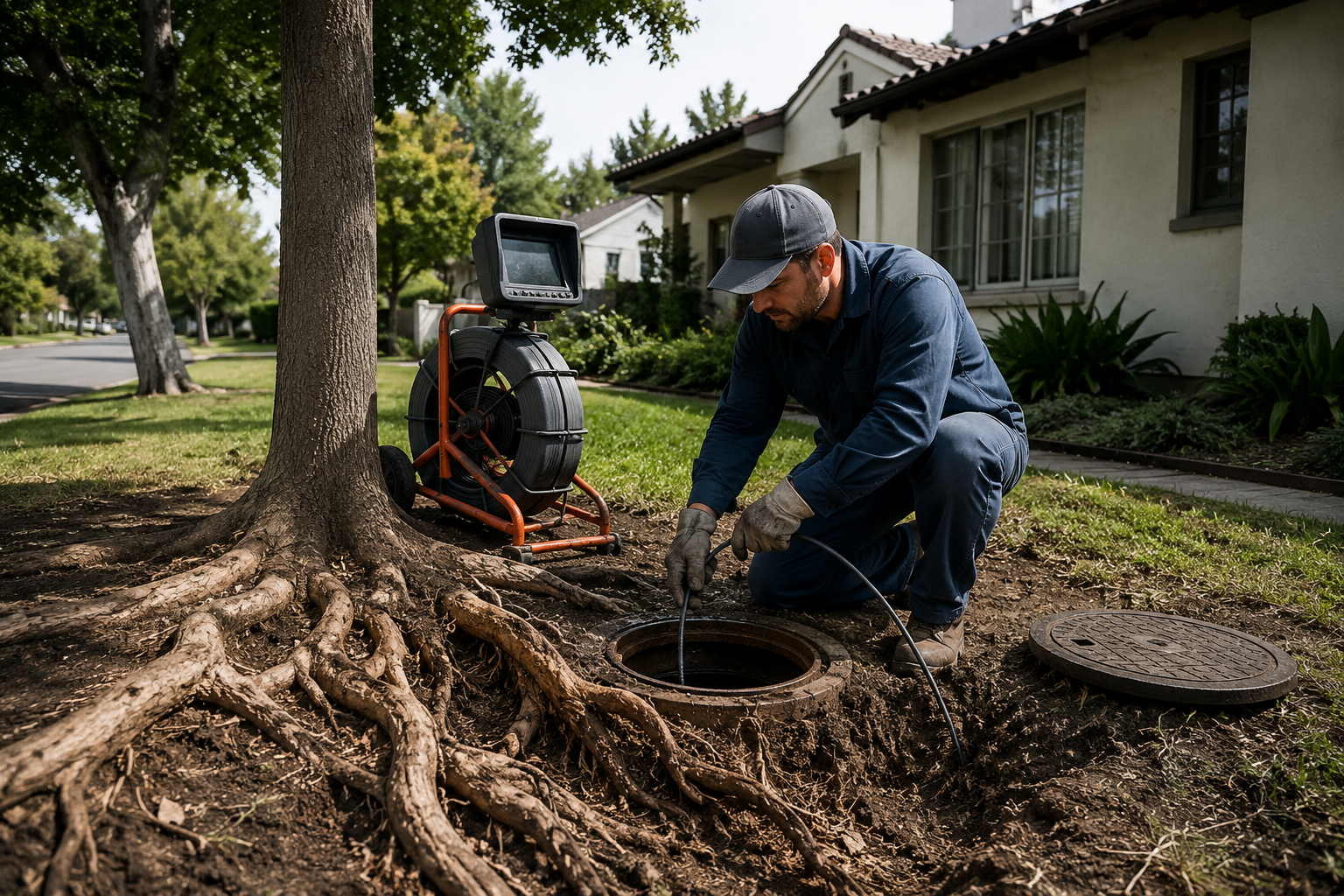
Tree roots don't break healthy sewer pipes — they exploit cracks and loose joints in aging ones. Per NC State Cooperative Extension, roots cannot create cracks in a sewer line; they can only enter openings that already exist. Claremont's problem is that both halves of the equation are here in force: one of the region's densest mature tree canopies growing directly over some of its oldest sewer laterals — original clay and cast-iron lines under the Village's 1900s–1930s Craftsman and Victorian homes.
Why Claremont Homes Are Especially Vulnerable
A Mature Tree Canopy Sitting Right Over Your Lateral
The "City of Trees" nickname is earned — and every one of those street and yard trees is a moisture-seeking root system. As the municipal tree-root guidance many utilities publish explains, roots follow the trail of water vapor escaping from cracks and loose joints until they find the pipe, then grow inside where the water and nutrients are. The Insurance Information Institute makes the same point at national scale: roots enter sewer lines through cracks and service-pipe joints, and aging systems make it worse.
Village-Era Homes, Original Clay and Cast-Iron Pipes
Clay tile sewer pipe was commonly installed right up until the late 1980s, and it's especially vulnerable — the mortar joints loosen with age and the material is easily penetrated by roots once cracked. A Craftsman bungalow near the Village or College Heights may be running a lateral that predates World War II. Cast iron fares little better: it corrodes from the inside over decades. The older the line, the more entry points, and the faster a root mass turns a slow drain into a full backup.
Warning Signs Tree Roots Are Already in Your Sewer Line
- Slow drains in multiple fixtures at once — one slow sink is a local clog; several means the main line.
- Gurgling toilets and drains — air trapped by a partial blockage.
- Recurring clogs at the lowest drain in the house (often a shower or floor drain).
- Sewage odors indoors or in the yard.
- Lush green patches or soft spots along the lateral's path — the roots found their buffet.
If two or more of these sound familiar, get a camera inspection before the rainy season. A root-choked lateral that limps through summer tends to fail during the first big storm week — when every plumber in the valley is booked.
Who Pays When the Lateral Fails? Ownership and Insurance in Claremont
Two pieces of bad news most homeowners learn at the worst possible time. First: in California, the private sewer lateral — from your house to the connection at the city main, often including the stretch under the sidewalk — is generally the homeowner's responsibility. Claremont may own the street tree, but the lateral its roots invaded is typically yours to repair. Second: the Insurance Information Institute is clear on this: neither a standard homeowners policy nor flood insurance pays for sewer backup damage — you need a separate backup endorsement added to your policy. If you own an older Claremont home and haven't added that endorsement, call your agent this week; it's inexpensive relative to what it covers.
How to Prevent Root-Caused Sewer Backups
Start With a Camera Inspection
A video inspection of the lateral shows exactly where the roots are entering and whether the pipe is structurally failing. It's the single best diagnostic — and worth doing before buying any older Claremont home.
Scheduled Mechanical Root Cleaning
Professional root cutting with augers and root saws clears the line, and the III advises having roots cut periodically if your line is prone to them. For older laterals, think of it like a dental cleaning: annual, boring, and much cheaper than the alternative.
Foaming Root Killers (and What Not to Pour Down the Drain)
Foaming root-treatment products can slow regrowth between cleanings. Caustic drain cleaners, on the other hand, do nothing against a root mass — skip them.
Install a Backwater Valve
The III's description is the pitch: a properly installed and maintained backwater valve allows sewage to go out, but not to come back in. For a home that has backed up once, it's the highest-value single upgrade — and the homeowner is responsible for installing and maintaining it.
Replace or Line the Lateral — and Plant Smart
The permanent fix is replacing the aging line — the III recommends new plastic pipe, which roots can't penetrate at the joints — or trenchless lining of the existing one. And when you're planting: keep thirsty, aggressive species well away from the lateral's path, and choose slow-growing varieties near it.
When the Backup Happens Anyway: Why It's a Category 3 Emergency
Here's the part the plumber blogs stop short of: the plumber clears the line, but what came out of it is a biohazard. Sewage backup water is Category 3 "black water" under the ANSI/IICRC S500 restoration standard, and the CDC warns that contaminated water can expose you to infectious diseases and chemical hazards. Porous materials it touched usually can't be saved, and the area needs professional extraction, sanitizing, and drying. Our full guide to sewage backup cleanup — first steps, costs, and insurance covers exactly what happens next.
Sewer Backup Help in Claremont, 24/7
SureDry Restoration handles Category 3 sewage cleanup, water extraction, structural drying, and repairs across Claremont's older neighborhoods — the Village, College Heights, and the foothill streets — dispatching from neighboring Pomona around the clock. See our full restoration services in Claremont and Claremont water damage restoration, or call (909) 573-5760 — if roots have turned your lateral into a time bomb, the cheapest time to deal with it is before the first storm.
Frequently Asked Questions
Can tree roots crack a sewer pipe?
No — per NC State Cooperative Extension, tree roots cannot create cracks in a sewer pipe; they can only exploit cracks and gaps that already exist. The real culprit is pipe age: as older clay and cast-iron lines crack and their joints loosen, roots follow the escaping moisture inside and grow into a clog.
How do I know if tree roots are in my sewer line?
The classic signs: slow drains in multiple fixtures at once, gurgling toilets, recurring clogs at the lowest drain in the house, sewage odors, and unusually lush patches or soft spots in the yard along the lateral's path. A camera inspection confirms it — and shows whether the pipe itself is failing.
Who is responsible for the sewer lateral at my Claremont home?
In California, the private sewer lateral — the pipe running from your house to the connection at the city main — is generally the homeowner's responsibility, often including the stretch under the sidewalk or parkway. Root clogs, cracks, and breaks in the lateral are typically yours to fix, even when the roots came from a street tree.
Does homeowners insurance cover sewer backup damage?
Usually not. Per the Insurance Information Institute, neither a standard homeowners policy nor flood insurance pays for sewer backup damage — you need a separate backup endorsement added to your policy. If you live in an older Claremont home with the original lateral, that endorsement is one of the cheapest gaps to close.
What kills tree roots in a sewer line permanently?
Nothing short of fixing the pipe. Mechanical cutting and foaming root killers clear the line, but roots regrow toward the moisture as long as the cracks remain. The permanent fix is replacing or lining the lateral — the Insurance Information Institute recommends replacing aging lines with new plastic pipe, which roots can't penetrate at the joints.
Is it safe to clean up a sewage backup myself?
Treat it as hazardous. Sewage-contaminated water is Category 3 'black water' under the restoration industry's ANSI/IICRC S500 standard, and the CDC warns contaminated floodwater can expose you to infectious diseases and chemical hazards. Small, fresh, contained spills are the only DIY territory — anything more needs professional cleanup.