If you've just found mold — or an inspector found it for you — the first question is what it will cost to make it go away and stay away. The honest answer: mold remediation is priced by what's feeding the mold and how far it has spread, not by a flat rate. This 2026 guide breaks down the real cost structure for homeowners in Pomona, LA County, and the Inland Empire, so you can budget sensibly and recognize a fair quote when you see one.
How Much Does Mold Remediation Cost? (The Quick Answer)
Industry cost data puts typical residential mold remediation at roughly $1,200–$3,750, with national averages around $2,200–$2,400 and per-square-foot estimates commonly in the $10–$25 range. Small, contained problems can cost a few hundred dollars; whole-home or HVAC-involved contamination can run five figures. Every number in this guide is a third-party industry estimate, not a quote — averages can't see inside your walls. An exact, line-item number takes an on-site look: schedule a free mold inspection or call (909) 573-5760.
Mold Remediation Cost by Location in the Home
Where the mold lives is the single best predictor of price, because location drives labor, access, and containment. Typical industry estimate ranges:
- Bathroom: $500–$1,000
- Crawl space: $500–$2,000
- Basement or lower level: $500–$3,000
- Attic: $1,000–$4,000 (severe cases considerably more)
- Air ducts / HVAC: $600–$2,000+ — and HVAC mold spreads spores through the whole house, so it rarely stays cheap if ignored
- Whole-home contamination: $10,000–$30,000+
Southern California wrinkle: the slab-on-grade tract homes common across the Inland Empire put mold under flooring and inside wall cavities rather than in basements — hidden locations that often aren't discovered until the growth is well established.
Anatomy of a Remediation Bill: What You're Actually Paying For
Most cost guides stop at ranges. Here's what's actually on the invoice, so a quote makes sense line by line:
- Containment: poly sheeting, negative air machines, and HEPA air scrubbers that keep spores from spreading to the rest of the house during work.
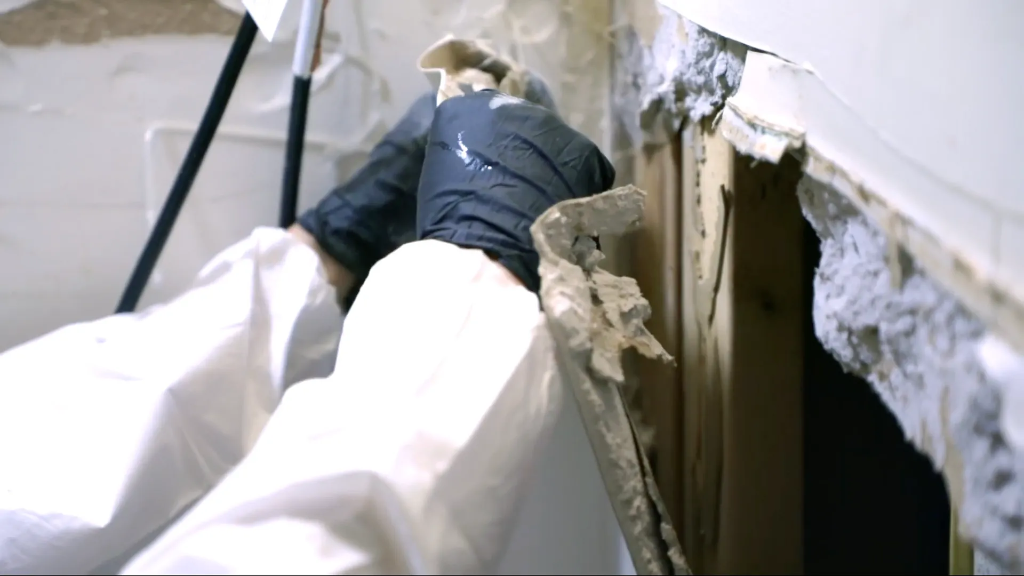
- Demolition and disposal: removing and bagging contaminated drywall, insulation, and flooring that can't be cleaned.
- Cleaning and treatment: HEPA vacuuming and EPA-registered antimicrobial treatment of the framing and surfaces that stay.
- Drying and monitoring: dehumidification with documented moisture readings until the structure is actually dry.
- Moisture-source repair: fixing the leak, drainage, or condensation that fed the mold — the line item that determines whether the problem is solved or just postponed.
- Rebuild: replacing the drywall, insulation, and finishes that were removed.
Why containment can be a big share of the bill: the EPA's tiers
The EPA's mold remediation guidance scales protection to the size of the problem: areas under about 10 square feet generally need minimal measures, mid-size areas (roughly 10–100 sq ft) call for limited containment with poly sheeting and protective equipment, and larger contamination warrants full containment with negative air pressure. That's why a 40-square-foot problem doesn't cost four times a 10-square-foot one — it crosses into a different class of job.
6 Factors That Move Your Price Up or Down
- Size of the contaminated area — the EPA tiers above set the containment class.
- Location and access — attics, crawl spaces, and wall cavities carry labor premiums.
- How long it's been growing — established colonies penetrate deeper into materials, forcing more demolition.
- The moisture source — a drip under a sink is a cheap fix; drainage correction or a slab leak is not.
- HVAC involvement — duct contamination spreads the problem house-wide and adds specialized cleaning.
- Rebuild scope — replacing a drywall patch versus a whole wall of finishes and cabinetry.
One factor that shouldn't move the price much: the mold's color. "Black mold" gets headlines, but the EPA and CDC treat all indoor mold the same way — all molds have the potential to cause health effects, and the remediation approach is the same. Be wary of quotes that add a large "toxic mold" premium based on color alone.
Can You DIY It? The EPA's 10-Square-Foot Rule
The EPA gives homeowners a genuinely useful line: if the moldy area is less than about 10 square feet — roughly a 3-by-3-foot patch — in most cases you can handle the cleanup yourself. Beyond that size, inside HVAC systems, or following significant water damage, bring in a professional. The catch in our area: by the time mold is visible on a wall in a slab-on-grade home, the growth inside the cavity is usually bigger than what's showing. If a musty smell came before the spot did, assume there's more — that's exactly what our guide to mold signs after water damage covers.
Mold Inspection, Testing & Clearance: What Each Costs (and Which You Actually Need)
Industry estimates put professional mold inspections at a few hundred dollars, with air or surface lab testing adding several hundred more. Here's the part that saves you money: per the EPA, if visible mold growth is present, sampling is usually unnecessary — the response is the same regardless of species: remove it and fix the moisture. Testing earns its cost in three cases: mold is suspected but hidden (musty smell, no visible source), a real-estate transaction needs documentation, or you want independent clearance after remediation. An honest company tells you when testing is worth it and when it's just an add-on. We inspect for free and only recommend lab testing when it changes the plan — that's part of our mold removal and remediation services.
Does Homeowners Insurance Cover Mold Remediation in California?
Only when the mold results from a sudden, covered peril — a burst pipe, an appliance failure, or similar accident your policy covers. Mold from gradual leaks, seepage, recurring humidity, or deferred maintenance is generally excluded, and many policies that do cover mold cap the payout. Two practical takeaways: document the water event that caused the mold (that's what coverage turns on), and act fast — a covered burst-pipe claim can turn into an excluded "neglect" argument if the wet materials sat for weeks. Our team documents the cause-and-effect chain on every insurance-involved job, the same way we do for water damage restoration claims.
How to Keep a Small Mold Problem From Becoming an Expensive One
The cheapest mold job is the one that never becomes established. The EPA's numbers make the economics plain: materials dried within 24–48 hours of a leak will in most cases not grow mold at all. That means the window between "water damage bill" and "water damage bill plus mold remediation bill" is about two days. If you've just had a leak, our first 24 hours after water damage checklist walks through exactly what to do — and our guide on how small water issues become mold damage shows what happens when the window is missed. For the full pricing picture on the water side, see the water damage restoration cost guide.
Get a Real Number: Free Mold Inspection in Pomona & the Inland Empire
Online averages can't see inside your walls. A free on-site inspection gives you an exact, line-item quote — the moisture source, the containment class, what has to come out, and what it costs to put back. SureDry Restoration serves Pomona, LA County, and the Inland Empire, with dedicated local mold teams in Claremont, Chino Hills, and the surrounding communities. Call (909) 573-5760 or schedule your free mold inspection — and if the fix is a 10-square-foot DIY job, we'll tell you that too.
Frequently Asked Questions
How much does mold remediation cost for a single room or bathroom?
Industry estimates put a typical bathroom at roughly $500–$1,000 and a single room at about $1,000–$3,000, depending on how much drywall or insulation must be removed and whether the moisture source needs repair. These are contractor ballparks, not quotes — an on-site inspection gives the real number.
Can I remove mold myself instead of paying for remediation?
Sometimes. Per the EPA, if the moldy area is under about 10 square feet (roughly a 3-by-3-foot patch), most homeowners can handle it themselves. Larger areas, mold inside HVAC systems, or mold following significant water damage call for professional remediation — and hidden wall-cavity mold is almost always larger than it looks.
Does homeowners insurance cover mold removal in California?
Usually only when the mold results from a sudden, covered peril — a burst pipe or appliance failure. Mold from gradual leaks, ongoing humidity, or deferred maintenance is generally excluded, and many policies cap mold coverage. Document the water event that caused the mold; that's what determines coverage.
How long does mold remediation take?
Most residential jobs take roughly 1–5 days, depending on the size of the contaminated area, the containment level required, and drying time. Larger or multi-room projects with rebuild work can run longer. Speed of the initial response is the biggest factor in keeping both the timeline and the cost down.
How much does a mold inspection cost — and do I need testing too?
Industry estimates put professional inspections at a few hundred dollars, with lab testing adding more. But per the EPA, if mold is already visible, sampling is usually unnecessary — the response is the same: remove it and fix the moisture. Testing earns its cost when mold is suspected but hidden, or when you need clearance after remediation.
Does mold come back after professional remediation?
Not if the moisture source is actually fixed. Mold needs water, and the EPA notes materials dried within 24–48 hours of a leak generally won't grow mold. Proper remediation always ends with correcting the leak, drainage, or condensation that fed the growth — skip that step and any cleanup is temporary.